Smart University of Medical Sciences
Number of Volumes 1
Number of Issues 2
Number of Articles 29
Number of Contributors 51
View Per Article 847.55
PDF Download Per Article 292.21
Number of Submissions 17
Number of Indexing Databases 1
Number of Reviewers 6
 

Journal of Law and Health Studies (J Law Health Stud)

Semiannual Journal of Law and Health Studies

The JOURNAL OF LAW AND HEALTH STUDIES (JLHS), is an Open Access journal and publishes original research papers, reviews, case reports, short communications/brief original article, and letters to the editor with priority for high-quality original papers. In general, there are four main areas for Law and health studies.


About the Bi-quarterly Journal of Law and Health

The scientific Bi-quarterly journal reviewed of law and health got licensed in 2023 and is a research and study Mega journal in the legal issues of services and goods of the health system. Its electronic and paper printing is under the supervision of the "Policymaking Council" and the "Editorial Board" in twelve main areas, and the articles submitted to this journal by researchers of various universities inside and outside the country, as well as other researchers and industrialists, are received and will be reviewed bilaterally and anonymously and finally published. This Bi-quarter journal enters the legal fields related to different dimensions of health and examines the challenges of different areas of the market of health goods and services in the society from a legal perspective. Planning, research, training, policymaking and therapeutic intervention by health care professionals with legal approaches can lead to the improvement of society's health. The interdisciplinary areas of law and health, in 2 scope and 17 subjects, as described below, will have the possibility of appearing in this scientific journal. Which their components are summarized as follow:

About the Law and Health and related Fields

Health Law is a vast interdisciplinary field, which by combining the science of law and various Health Sciences through Policymaking, Legislation, management and regulation and ensures the health of society, and draws, examines, manages and supervises the road map of the legal program of society's health from the perspective of social and applied sciences. Furthermore, social sciences by supporting education and acquiring skills through the management and legal supervision of health in the context of religion, ethics, economy and so on. It has permeated in the practical areas of lawyers' services and in various aspects of Health Law including the environment, new technologies, Artificial Intelligence and etc. and provided legal and specialized solutions to solve the problems caused by the challenges of different areas of the market of goods and health services in the society. Therefore, considering the importance of Health Law in planning, research, education, policy making, management and supervision of therapeutic intervention by health care professionals with legal approaches, it can be a significant factor in promoting the health of society and educational justice. It should be noted that the method of dividing Law and Health according to the existing patterns with the aim of better benefiting from all legal and regulatory aspects in two Humanities and Social Sciences / Applied and Allied Sciences Scopes, preventing fragmentation and focusing on the overlapping and commonalities of the axes. And it has been prevented from repeating topics and focusing on topics; Based on this, the classification of axes does not only mean their applied or social aspects. Therefore, other researchers may have different opinions on the type of classification, which is respectable, and any suggestion or criticism to revise the main and sub-themes will be considered.

With regard to the aforementioned, based on the breadth of specialized sciences and using the knowledge of researchers and experts in the fields of policy and supervision, and following the example of the famous universities of the world and existing disciplines in the field of Health Law, with a new and pervasive perspective, related fields have been formulated to cover the existing gaps. Based on the existing experiences, the field of Health Law is divided into 17 sub-jects as follows:

A- Humanity and Social Sciences of Health:

Considering the importance, role and necessity of social issues and paying attention to sociological issues in promoting and improving the quality of life and health of people as social capital, and paying attention to social developments and the way of governance, policy making and economy that affect people's social, mental and physical health of society, the basis of social sciences related to health rights can be subdivided in 7 basic fields as follows:

1- Health Sciences Law and Education: This field studies the legal aspects of education and training, taking into account justice in legal, managerial, policy-making, and supervisory issues of educational centers, specialists, users and beneficiaries of education in health sciences and it deals with how to assess and evaluate the above areas.

2- Law, Sociology and Political Science in Health: This field studies different dimensions of research in political science, sociology and humanities and its role from a legal perspective in the health of the society.
3- Law, Religion and Spirituality in Health: This area examines the legal aspects and the link between spirituality, religion and health as well as their legal aspects. In fact, paying attention to these issues is a prerequisite and guaranteeing a healthy life. Taking into account the synergistic and mutual effect of spiritual health and the impact of legal issues on it has a significant role in the mental and physical health of the society, without which other aspects such as biological, psychological and social cannot have a favorable performance at the level of the quality of human life.

4- Public Health Law: This broad area studies health problems in Vulnerable Populations, including Women, Children, and the Elderly.

5- The Right to Health and Bioethics: By examining the dimensions of the Right to Health, this field deals with regulating and implementing the duties, obligations and responsibilities of health care professionals and workers before, during and even post-death in patient care.

6- Economic, Financial and Health Policy Law: This field studies the legal aspects of the economy as the foundation of health development and promotion and by organizing and conducting scientific and sound regulatory and management in the financial and economic foundations of health related organizations, the way of financial management, paying attention to the allocation of taxes to the health domain and compensation by insurers organizations, so that it can eliminate many challenges and obstacles and help the transparent space and away from corruption in the realization of justice in health, and on the other hand with the right role of health.

7- Occupational Health and Environmental Law: This field considers the legal aspects of health and safety of the workforce with the approach of human capital and focuses on strengthening the legal foundations to defend the right to health of the workforce. Furthermore, environment and ecosystem as a place of human life and supporter of human should be regulated and supported by experts of international law and legal issues to provide more context for its preservation.


B- Allied and applied health sciences:

Management, regulation, and policymaking in applied sciences of health are among the important topics in order to improve the quality of society's health. Therefore, legal issues of applied health sciences can be described in 10 sub-fields, which are studied as follow:

1- Law of new Health Technologies: This field includes, while studying the legal dimensions of new technologies in health, the risk assessment, safety, inspection and monitoring, product recalling or collection, labeling, toxicity effects, and the release of microorganisms. Deformed and genetic editing in the field of biotechnology, nanotechnology, tissue engineering and so on.

2- Digital Health and Law: This field studies the legal and ethical aspects of the application and processing of information in computer and electronic systems, managing health information and electronic health records, improving the protection and access to personal data while respecting confidentiality, as well as reducing errors in collecting information, creating a database in medical sciences.

3- Law and Application of Artificial Intelligence in Health: This area examines ethical requirements, including the relationship between specialists and patients, equal access and legal requirements for collaborative responsibility, informed consent, privacy and confidentiality, and intellectual property rights, justice and fairness, equality , it focuses on transparency, non-discrimination and public trust, as well as regulation of the activity of artificial intelligence in diagnosis and robots in the field of health. It should be noted that this field has an effective and close relationship with the topic of digital health.

4- Forensic Sciences in Health: This field studies the common legal aspects in the presence of a crime scene and the diagnosis of the cause of death, the identity of the deceased, the time of death, the severity and form of injuries or serious physical and mental injuries. It plays its role in the most important parts of criminal sciences and in many criminal lawsuits such as murder, sexual assault, rape and molecular and biological identification of the accused or the compounds in the blood, with the presence of the criminal medicine team, criminal toxicology, criminal chemistry, criminal psychiatry and criminal pathology.

5- Entrepreneurial and Health tourism Law: This field focuses on the legal issues related to international travel and health and religious tourism and the necessity and inevitability of access to medical information and services in the era of the global village as an issue. It is important for the national health care and the global health systems, and it pays attention to the legal issues of entrepreneurship in the field of health, and by creating appropriate policy and legal mechanisms, it provides reliable conditions for entering health tourists.

6- Law and Food and Agriculture Industries: This area studies the legal aspects of guaranteeing the quality of food products and medicinal plants in order to help the health system and realize justice in health and provide healthy food for the members of the society. Paying attention to agricultural sciences, nutrition, chemistry, physics, physiology, microbiology and biochemistry in all stages of production of food and agricultural products is of great importance, and this field also deals with the law of modern technologies in the way of using, controlling and releasing transgenic plants and regulating them.

7- Mental Health Law and Behavioral Sciences: This field studies the legal aspects of human mental health in spiritual, mental and social aspects and with the aim of mental management and it takes into account the improvement of behavior and physical health and the ways to achieve health in all human dimensions.

8- Law, Healthcare and Prevention: this field studies the legal aspects of the health care system and prevention of diseases, challenges and related problems in the society and the omission of the duties of individuals and the administrators of the health care system.

9- Healthcare Law: This field studies the legal dimensions of reducing the effectiveness and efficiency of treatment methods in order to remove obstacles through the implementation of laws and regulations with the aim of realizing good governance in the health system. The necessity of systematizing family health programs and paying attention to chronic and infectious diseases, as well as the holistic approach and using the capabilities of modern medicine along with traditional and integrated medicine are studied in this section.

10- Pharmaceutical and Cosmetic Law: This field is studying the legal aspects of the right to health, especially in access to medicine as one of the most important and fundamental rights of every human being. Effective study and research in the field of implementing the pharmaceutical laws and regulations can play an important role in improving the health of the public and help the officials to plan to protect the public health in the society from the harm caused by drug shortages.


               Publons


Original Article Law Policy Management,, and Regulation of Health

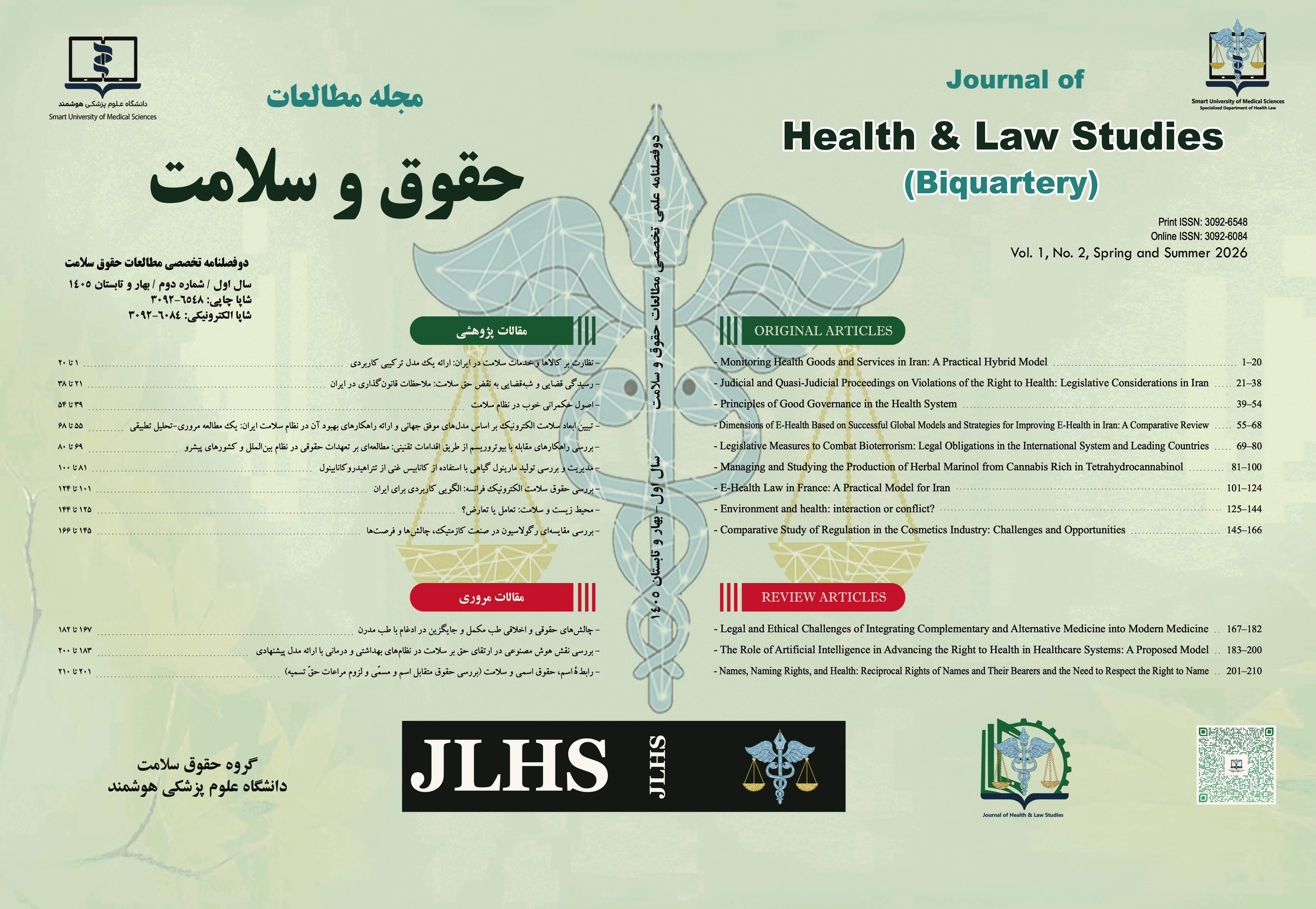
Monitoring Health Goods and Services in Iran: A Practical Hybrid Model

Pages 1-20

Shahriar eslamitabar

Abstract Background and Objective: Goods and services are the two main outputs of industry and the economy, and ensuring their quality, safety, and efficiency requires monitoring of the two processes of production and supply. Since the health sector is of particular importance, monitoring of these processes must be carried out accurately and in accordance with scientific standards; this monitoring is not only an organizational task but also a governance task that is applied by governments as custodians of public health.
Methods: This article was prepared based on a review of information from manufacturing companies and the regulations of the Food and Drug Administration. Then, qualitative data were analyzed through content analysis and a practical hybrid model was proposed.
Findings: Health monitoring is divided into two areas: services and products. Health services are monitored in two general forms: 1- Monitoring of healthcare facilities; 2- Monitoring of healthcare professionals. The monitoring of health products and commodities is carried out by regulatory experts in the manufacturing company and by inspectors outside the company. The main regulatory body is the Food and Drug Administration of each country. Supervision of specialists is the responsibility of the Ministry of Health and includes training, licensing and ongoing supervision by the relevant organization. Supervision and control use specific tools such as providing guidelines and instructions, conducting inspections and enforcing the law.
Conclusion: Supervision must be carried out continuously in order to ensure the quality and safety of health goods and commodities. Due to the different nature of services and goods, their monitoring processes are quite different. First, services are not always tangible and cannot always be fully monitored. Second, they are usually produced and supplied at the same time. Regarding goods, pre-market and post-production supervision should be carried out continuously by qualified experts to prevent counterfeit and substandard goods from entering the consumer market. Accordingly, the laws required for monitoring goods and services are different, and the relevant monitoring approaches must be considered in each area. Therefore, it is important and necessary to distinguish between monitoring goods and monitoring services and between the methods used for each. In this study, an attempt has been made to explain the important methods and monitoring strategies for each area based on their importance.

Original Article Religious and Spiritual Rights in Health

Judicial and Quasi-Judicial Proceedings on Violations of the Right to Health: Legislative Considerations in Iran

Pages 21-38

Asghar Arabian, Mohammadreza Alipour, Maryam Haidari

Abstract Background and Objective: Health is one of the main pillars of development and a fundamental human right. Therefore, governments are obliged to fulfill the right to health for their citizens. One of the ways to pursue this right is through judicial and quasi-judicial proceedings, which, above all, must be properly reflected in the laws. The use of experts and specialists in criminal sciences and health can be very helpful in this regard.
Methods: Using general scientific methods, this study examined the dimensions of the right to health in national and international law, and by analyzing information, examined practical solutions to improve monitoring and addressing the violations of the right to health in Iran.
Findings: Based on international documents and standards and domestic laws, all governments in the world are obliged and committed to the right to health of their citizens. Therefore, states take legal action against violations of this right at two levels: violations of the right to health by (1) healthcare professionals and (2) the state. Therefore, according to the law, both professionals and states are responsible for violations of the right to health of patients.
Conclusion: Success in judicial and quasi-judicial review processes depends on the fulfillment of international obligations related to the right to health by states. The right to health should be a top priority in national legislation, be defined clearly in the constitution, and be linked to the more fundamental right to life. However, pursuing the realization of this right faces serious challenges, including the broad scope of this area, the precise definition of its extent, limited expertise and difficulties with judicial assessment, and the lack of funding. Therefore, clearly defining boundaries, provision of budget, establishment of constructive cooperation between the three branches of government, non-governmental organizations and ombudsmen, and commitment to implementing laws seem to be important and necessary as the main strategies to prevent the violation of society’s right to health. This study, by examining the challenges in this area, seeks to provide appropriate solutions to improve the right to health in society.

Review Article Law Policy Management,, and Regulation of Health

Principles of Good Governance in the Health System

Pages 39-54

Akbar Abdoullahi Asl, Roya Ayazi Nasrabadi, Mahmoud Afrasiyabi

Abstract Background and Objective: Good governance includes decision-making and implementation of key decisions, which, while promoting human rights, are used to enhance the productivity of various systems and areas. The elements and framework of governance have been actively promoted by international institutions as a development tool in recent decades in various areas, including health. Good governance can be achieved well by emphasizing and paying attention to the principles of transparency, responsibility, accountability, the rule of law, participation, justice, efficiency and productivity, continuity and sustainability, intelligence and information, and ethics.
Method: This article was prepared by reviewing scientific sources, articles, and both domestic and international guidelines.
Findings: One of the characteristics of good governance is the participation and solidarity of citizens in decision-making and legal oversight in the field of health. Good governance is an effective deterrent against corruption and will increase productivity. It also makes governments accountable to the people and the international community. Therefore, good governance, especially transparency, if properly implemented, will reduce administrative corruption. In the field of health, good governance will improve the performance of the health system and, as a result, will maintain and improve the health of the community.
Conclusion: With the move towards globalization, the need for a single standard for good governance at the global level is felt more than ever before in order to strengthen the accountability of governments. This standard is in line with the promotion of productivity, with the secondary goals of combating corruption, transparency and achieving a healthy administrative system in the health sector. However, due to cultural and religious reasons, the adoption of this universal standard in political and civil matters always faces serious resistance. Nevertheless, good governance has a direct impact on improving community health, and the success of health programs requires the formulation and implementation of appropriate governance methods.

Original Article Economic Law and, Financial Health

Dimensions of E-Health Based on Successful Global Models and Strategies for Improving E-Health in Iran: A Comparative Review

Pages 55-68

Seyyed Babak Mozafari, Mahdi Saeedian, Shirin Khalili

Abstract Background and Objective: e-Health, as an integration of information technology and healthcare services, plays a pivotal role in enhancing access and quality of care. This study aimed to elucidate the key dimensions of e-Health based on successful global models and propose localized strategies for Iran's health system.
Methods: This comparative review was conducted in 1403 (Iranian calendar). Sources included articles indexed in PubMed, Scopus, and SID, and WHO reports (2015–2023). Analysis was performed using a four-dimensional framework (infrastructure, services, education, security) and a comparative approach.
Findings: Analysis of global models revealed four core dimensions of e-Health: infrastructure (development of 5G and integrated EHR), remote services (localized telemedicine, especially for underserved areas), education (continuous physician training and public health literacy campaigns), and security (national legislation similar to HIPAA and blockchain implementation). Key recommendations include international partnerships, R&D investment, and a national strategy (summarized in a conceptual framework model).
Conclusion: Localizing these strategies across infrastructure, service, education, and security dimensions can increase equitable access to digital health services by up to 50% and improve care quality. Addressing local challenges such as rural infrastructure and cyber law, it is recommended that the Ministry of Health develop a national plan for 1404–1408 (Iranian calendar) to reduce costs and improve satisfaction among patients and healthcare staff.

Original Article Law Policy Management,, and Regulation of Health

Legislative Measures to Combat Bioterrorism: Legal Obligations in the International System and Leading Countries

Pages 69-80

mehdi sanei, salar shahbazi, Najibeh Mirani

Abstract Background and Objective: Biological weapons are relatively inexpensive and easy to use, can spread widely, have dual-use applications, and can be developed covertly. These features have heightened global concerns about their development and use. This study examines legislative measures against bioterrorism in the international system and leading countries and proposes measures for Iran.
Methods: This applied study used a descriptive and analytical approach with a comparative component. A literature and document review covered national and international laws, legal instruments, scholarly articles, and specialist sources. The study also compared the legal systems of selected leading countries to identify effective measures against bioterrorism.
Findings: Bioterrorism is the intentional release or use of biological pathogens to cause disease, fear, or death in humans, animals, or plants. Despite the adoption of major international instruments, including the Geneva Protocol and the Biological Weapons Convention, weak enforcement, inadequate oversight, and political and discriminatory approaches by some governments have reduced their effectiveness and allowed bioterrorism threats to persist.
Conclusion: Countries such as the United States have taken effective measures against bioterrorism through comprehensive laws and specialized enforcement mechanisms. Iran’s legal system still faces gaps in legislation and implementation. Drawing on the experience of leading countries, strengthening legal frameworks, and developing oversight and prevention mechanisms can improve Iran’s response to bioterrorism.

Original Article Food and Agricultural Industry Law

Managing and Studying the Production of Herbal Marinol from Cannabis Rich in Tetrahydrocannabinol

Pages 81-100

Rahim RahbarNouhi, Nasrin Ghavami, Mohammad Reza Dehghani

Abstract Background and Objective: Marinol was actually the first cannabinoid-based drug approved by the U.S. Food and Drug Administration (FDA) in 1985. The use of this drug to reduce the side effects caused by chemotherapy in cancer patients, such as anorexia, nausea, pain and vomiting, as well as to treat weight loss in AIDS patients, was approved in 1992.
Methods: In this article, we review Marinol, while referring to a summary of the history of medicinal cannabis. We also explore how plant cannabinoids help in the endocannabinoid system, which is responsible for maintaining the body's health balance. All steps from raising seedlings to laboratory production of the drug (plant Marinol) and preparation of capsules were examined. Monitoring and analysis of cannabinoids were conducted using gas chromatography–mass spectrometry (GC–MS).
Results: The resin yield in the flower was 38%, from which 97.5% THC and 2.5% other cannabinoids were obtained at the optimum point; the majority of these was cannabinol, and thus the percentage of the active ingredient in the plant was calculated as 37.05%. After evaporation of the solvent at room temperature, the obtained resin was dissolved in sesame oil, resulting in various dosages of herbal Marinol.
Conclusion: The idea of using herbal Marinol (extract of cannabis flower resin) with high THC in pure sesame oil instead of synthetic dronabinol is due to its fewer side effects, higher therapeutic effect, shorter duration in the body, and its lower cost compared to the chemical form of this drug. Therefore, effective treatment with fewer side effects can be achieved at a lower cost and by using a natural (herbal) source. What is certain is that paying attention to the medicinal properties of this plant requires appropriate policymaking and management for the therapeutic use of the numerous compounds and secondary metabolites of this plant, and the regulatory and governing bodies must intervene in this matter so that the therapeutic properties of this plant can be utilized.

Original Article New Technologies Health and Law

E-Health Law in France: A Practical Model for Iran

Pages 101-124

Mohammadreza Alipour, MAHDI SAEIDIAN, Nastaran Komijani

Abstract Background and Objective: France is known as the birthplace of law and rights. French laws in the field of health care have been formulated and approved based on the pillars and elements of the right to health introduced by the main international human rights institutions and the World Health Organization, in alignment with contemporary needs and possibilities. This area of modern French law, with an emphasis on e-health, can be a suitable model for the Islamic Republic of Iran in formulating the aforementioned laws and regulations.
Methods: The article reviews the laws of France, a leading country in e-health, and presents a practical model for Iran.
Findings: The foundations of health care law in France, like in any other country, include legal oversight of health care professionals, informed consent to treatment, negligence, error, and confidentiality of personal information, which, although it has many similarities with the general trend prevailing in the world, is unique in its own way. The role of the French public health law is also significant in this regard. On the other hand, given that the right to individual independence and freedom is highly respected in France, implicit or explicit contracts between healthcare professionals and their patients have been carefully considered by the legislator in the form of civil law and contract law in France. These contracts will be accompanied by legal liability for negligence and possible errors from the outset.
Conclusion: Given the close cooperation of European countries in the framework of the European Parliament, important legal issues have been raised and resolved in the framework of French and European Union laws and regulations in telemedicine and telehealth. These include the confidentiality of electronic health records, given the nature of these types of records and the possibility of access by unauthorized individuals; the scope of authorized activities of specialists and licensing; and the jurisdiction dealing with possible violations, liability for negligence, errors and technical defects of telemedicine equipment, which have been legislated in all matters according to the needs and conditions of the day.

Original Article Environmental Law and Occupational Health

Environment and health: interaction or conflict?

Pages 125-144

Ali Darvishi Boloorani, Yaser Zandi Shafagh

Abstract Background and Objective: The interconnection and entanglement between the environment and human health are extremely deep and complex. Therefore, increasing awareness and comprehensively examining it is important. Adopting a preventive approach rather than a reactive one can prevent the emergence of many environmental and health problems and, if such problems occur, minimize their consequences.
Methods: First, the literature was reviewed using books, printed and online articles, and then qualitative data were analyzed through content analysis. An applied model was subsequently presented.
Findings: The destructive effects of human activities on the environment and subsequently, the feedback of its consequences have been particularly affecting humanity in the field of health. In most cases, these destructive activities have been identified and even predictions have been made to correct and prevent them. Now it is necessary to determine what actions and activities humans should take that not only do not cause further harm to the environment but also can reduce the negative effects of past destructive activities and, in the light of interactive activities, ensure and maintain their own health and the environment as much as possible.
Conclusion: In this study, three major and fundamental issues have been considered as key causal factors that have a direct cause-and-effect relationship between human activities, the environment, and consequently, environmental protection and public health. However, due to the dynamic and living nature of both humans and the environment, it is not possible to consider only a linear and direct relationship and there is a very complex and extensive intertwining. Nevertheless, in order to preserve the coherence of the discussion and reach meaningful results, only the direct cause-and-effect relationship has been discussed and examined in the presented model.

Original Article Law Policy Management,, and Regulation of Health

Comparative Study of Regulation in the Cosmetics Industry: Challenges and Opportunities

Pages 145-166

Mehdi Moazzami goudarzi, seyed sahand eisapoor

Abstract Background and Objective: In order to ensure the health and safety of cosmetic products, it has become inevitable and almost universal in all countries of the world to set guidelines and monitor this group of health products, which themselves are also considered part of the prerequisites for health services.
Methods: Regulations and official guidance from Iran and six comparator jurisdictions were analyzed using a common framework for classification, ingredient restrictions, market entry, labelling and post-market surveillance.
Findings: The comparison identified differences in borderline product classification, safety documentation and registration or notification pathways. Labelling and adverse-event reporting requirements also varied.
Conclusion: The proposed framework for Iran is based on requirements proportionate to product risk, clear labelling, and stronger post-market surveillance. These proposals aim to protect consumers and support innovation and market access.

Review Article Healthcare Law

Legal and Ethical Challenges of Integrating Complementary and Alternative Medicine into Modern Medicine

Pages 167-182

Mehdi Doostdari, Fatemeh Anvar, Iman Mahdavianrad

Abstract Background and Objective: Given the need to integrate traditional and complementary medicine into modern academic medicine, it is essential to evaluate and carefully consider the opportunities and challenges of complementary and alternative medicine in this integration in general, so that the necessary studies can be conducted for each country or geographical area based on the regulations and policy-making, legal, ethical, regulatory, educational, and research frameworks.
Methods: This article was prepared by reviewing the latest research results presented in books and articles available both in physical and digital libraries, and appropriate solutions have been presented to deal with the legal and ethical challenges facing this field.
Findings: The integration of traditional and complementary medicine with modern medicine brings with it numerous opportunities and challenges. The most important challenges include legal and ethical challenges, regulation, development and implementation of training programs, and attention to research-oriented approaches and the validity of research, especially clinical research in complementary medicine. Every medical field requires legislation, control and legal supervision from within or outside the organization. In addition to ensuring quality, this increases efficiency, reduces the risk of using tools and methods and prevents any abuse and fraud. This is more important in the field of complementary medicine, which relies on a relationship of trust between the therapist and the patient.
Conclusion: The integration of traditional and complementary medicine into modern medicine, despite its numerous advantages, faces serious challenges that require appropriate solutions in the areas of legislation, supervision, quality control, education and research. In the legal field, it is necessary to provide for professional licensing, define quality standards for practitioners to prevent negligence and errors, address compensation through expanded medical liability insurance, address legal liability through informed consent, and protect patient privacy. Regulation in the two sectors of products and specialists should also be implemented with care for the quality, safety, and effectiveness of products and methods.

Review Article New Technologies Health and Law

The Role of Artificial Intelligence in Advancing the Right to Health in Healthcare Systems: A Proposed Model

Pages 183-200

Maryam Bahrkazemi, Amireza Mahmudi

Abstract Background and Objective: Given the increasing advances in the field of artificial intelligence, this technology can have both positive and negative effects on health rights and healthcare. Artificial intelligence may pose challenges and create gaps concerning breaches of patient privacy and harm to physicians’ credibility, which may lead to disregard for human rights and have negative effects on doctor-patient relationships. One of the most important goals of research on the impact of artificial intelligence on healthcare services is to identify the strengths and weaknesses of healthcare systems based on artificial intelligence.
Methods: This research is based on a study of scientific articles and follows a descriptive method in order to propose a suitable model for the optimal use of artificial intelligence to respect the right to health in healthcare services.
Findings: In this research, the challenges of using artificial intelligence in the healthcare field are identified and analyzed. We also provide appropriate solutions to protect human rights, improve health services, and better understand the effects of artificial intelligence on the efficiency of healthcare systems.
Conclusion: This technology can improve diagnostic accuracy, increase access to health services, and improve the quality of medical care. However, at the same time, ethical and legal concerns, privacy issues, and the potential for misuse require proper consideration and the adoption of precautions for its appropriate use in the health sector. It is also recommended that, given the rapid and remarkable growth of artificial intelligence, governments provide the necessary incentives for the entry of knowledge-based and innovative companies, and that legislators address legal barriers and draw up rules and regulations in line with international documents, so that methods and regulations can be developed together.

Review Article Pharmaceutical and Cosmetic System Law

Names, Naming Rights, and Health: Reciprocal Rights of Names and Their Bearers and the Need to Respect the Right to Name

Pages 201-210

Umm alFakhr Allameh, Somayeh Allameh

Abstract Background and Objective: Names serve as identifiers and carry implications for identity, culture, society, law, and religion. A name is a lasting designation for a person, hospital, healthcare center, or institution and can convey values, emotions, beliefs, and cultural symbols. This article examines the relationship between names and their bearers, the rights associated with names, and the concept of the right to name, with an emphasis on sacred names for hospitals and healthcare centers.
Methods: This descriptive and analytical study drew on hospital data, sources in law, Islamic jurisprudence, and psychology, and research on identity and naming in healthcare organizations. Data on 1,560 hospitals were analyzed descriptively to determine the share of each naming category.
Findings: Of the 1,560 hospitals, 128 (8.2%) had Islamic or religious names and 385 (24.7%) were named after the Imams or members of the Prophet’s household. Together, these categories accounted for 513 hospitals (32.9%). Naming frequencies alone cannot establish public preference, explain how the names were chosen, or demonstrate effects on health. Prior studies have linked names to identity and hospital brand image to patient satisfaction. The independent effect of sacred hospital names on health outcomes has yet to be tested directly.
Conclusion: The right to name can be understood as an interdisciplinary concept encompassing the choice and retention of a name, respect for identity, the fit between a name and its bearer, and responsibilities arising from its use. Sacred names can form part of healthcare centers’ cultural identity and carry symbolic meaning. Attributing direct therapeutic or health benefits to the name itself requires empirical evidence. Future studies should test how hospital naming affects trust, perceptions, a sense of belonging, and the choice of healthcare facility.

Original Article Economic Law and, Financial Health

The Effective methods for determining and controlling drug prices in Iran based on leading countries

Articles in Press, Accepted Manuscript, Available Online from 18 February 2025

seyyed mohammad ali mirbehbehani, morteza meftahi

Abstract Background and purpose: Perhaps the most important part of health is medicine. A access to Pharmaceutical Products is considered one of the pillars of human rights. This directly affects the right to health and the right to life. Considering that high-cost and highly effective pharmaceutical products account for a huge share of household expenses, in order to ensure relative justice in access, appropriate price determination and optimal price control methods are required.
Research Method: This article has been written using the paper and e-books and articles available in real and virtual libraries in descriptive-explanatory method.
Findings: Determining the price ceiling is the first step in controlling the price of pharmaceutical products, which is determined based on considerations such as cost, benefits, risks of using drugs, or market conditions. Sometimes governments do not consider any of these requirements in order to follow the free market policy. According to the nature of drugs, these controls are carried out in three categories: brand, generic and imported drugs, although some drugs may be included in the combined category. Due to the high cost and the importance of innovation, price control of brand products is more important and complicated.
Conclusion: Determining the price ceiling and fighting against overselling in order to support production and innovation with the aim of supporting the consumer are necessary as ways to determine and control drug prices. For this purpose, the fight against price gouging regarding imported products is done in support of domestic production. Compulsory licensing is also another good way to control the price of branded pharmaceutical products.

Original Article Pharmaceutical and Cosmetic System Law

Pharmaceutical Pricing and Reimbursement in Iran: Providing a Solution to Improve Access and Production

Articles in Press, Accepted Manuscript, Available Online from 18 February 2025

Shahriar eslamitabar

Abstract Background and Objective: economic access to medicine and treatment is one of the most important dimensions of the right to health, which is considered one of the goals of national development in addition to international human rights. Achieving this important goal is possible by using correct and specific strategies such as pricing and compensation of costs through insurance.
Methods: First, the literature of the article was reviewed using e-books, and articles, then the qualitative data was analyzed through content analysis and a practical model was presented.
Results: Price control is done in two ways, direct and indirect. Determining the price and correcting it, it is the direct type, and compensation of costs through insurance is considered the indirect type. As the first control step, pricing strategies are followed based on two basic principles: 1- Value-based pricing, which is related to drug effects and drug cost, and includes the same requirements. 2- Price Classification based on the type and nature of the drug, including generic, under patent and imported.
Conclusion: Since Iran has recently abandoned the Cost Plus method (determining the prices based on a percentage more than the total cost), it is necessary to constantly regulated the prices according to the current conditions, needs and the existence of similar drugs, but This action dose not seems correct in any situation and the necessary considerations regarding single-prescription drugs have not been taken into account. While advanced countries such as France and England include all drugs in the insurance coverage list based on their medicinal nature without special requirements and prerequisites, the budget of countries such as Iran does not allow such a thing.

Review Article Pharmaceutical and Cosmetic System Law

Comparative study of regulatory oversight of pharmaceuticals in developing countries

Articles in Press, Accepted Manuscript, Available Online from 19 January 2025

کمال اله قلی

Abstract This article examines the state of pharmaceutical regulations in the developing world by constructing international indices derived from World Health Organization data. The past two decades have been marked by profound changes in the pharmaceutical sector, including a complete overhaul of intellectual property systems at the behest of the World Trade Organization and the consolidation of global active pharmaceutical ingredient suppliers in China and India. Although drug ownership laws have been regulated and implemented globally, we surprisingly have little information about how national market entry standards and the regulation of pharmaceutical products have changed.

Original Article Law Policy Management,, and Regulation of Health

Cosmetovigillance, from definition to regulation. EUROPE and IRAN

Articles in Press, Accepted Manuscript, Available Online from 23 August 2025

Mehdi Moazzami goudarzi

Abstract Background and objective: Cosmetovigilance is a recent concept. The term itself has just been indexed. It is a form of health public surveillance with a public health objective; it therefore differs from the surveillance carried out by industrialists, who aim at the safety of the product for commercial purposes, and differs from peer surveillance whose purpose is medical. Cosmetovigilance concerns cosmetic products. The 2006 European resolution has laid the ground work for a cosmetovigillance system based on case notifications. As of 2013, the new European regulation requires that serious undesirable effects reported to the competent authority should be transmitted to the competent authorities of the other Member States and to the person responsible for the cosmetic product. Two problems are yet to be solved: causality assessment and reporting categories.
 
Result and discussion: Cosmetovigilance systems are genuine means of obtaining information on the safety of cosmetic products and their ingredients. They can be used by Europe to check that new directives ensure a high level of safety. Cosmetovigilance makes it possible to rule out or control potentially hazardous ingredients and can thus set our minds at ease about the products placed on the market.  Until now, there is no act to design and establish local cosmetovigillance system from the side of official authority in IRAN

Sociology and Political Science in Health Law

Legal And Ethical Issues Of Organ Donation And Transplantation From The Deceased

Articles in Press, Accepted Manuscript, Available Online from 13 September 2025

Ali Eslamifar

Abstract Background and Aims: One of the most important ethical issues related to health law is related to organ transplantation. In this regard, the strategies for increasing the transplanted organ and the ethical considerations related to the fair collection and distribution of the tissues and body parts of the deceased are of special importance, which we discuss in this article. First, the various strategies available in the world to increase the donation rate from the deceased as the most appropriate source of transplant organ procurement are discussed from an ethical point of view, and then the general ethical considerations of this field and the way of fair distribution of organs based on different criteria, priorities and philosophical theories are discussed. has been.   Material & methods:  This article was written using the books and articles available in real and virtual libraries in a descriptive-explanatory way. Results: The most important policies to increase the donation rate from the deceased that are examined in this article are: 1- Mandatory selection 2- Presumed consent 3- Required request and common research 4- Voluntary artificial respiration 5- Donation to a third party 6- Use of prisoners. In this article, along with a brief description of each of these policies, an analysis is provided for each of them from an ethical point of view. Conclusion: Each of the methods of removal and fair distribution of transplantable organs and tissues have advantages and disadvantages from the philosophical, ethical and legal points of view. In this field, a suitable law, in addition to being based on the logic and needs of the people of the society, should be formulated in accordance with the values, beliefs and cultural, social and religious criteria of the people, because without considering these principles, comprehensive laws can never be hindered and Effectively achieved. Of course, through education and information, culture should be created in such a way that the interests of society are also provided in this regard.

Health Sciences Law and Education

An Overview of Health Law

Volume 1, Issue 1, March 2026, Pages 1-16

https://doi.org/10.22034/jlhs.01.01.001

Shahriar Eslamitabar

Abstract Background and objective: This study draws on national and international experience and considers the development of health law as a new academic discipline. The right to health is one of the aspects of human rights, the realization of which is essential for the realization of other human rights and is inextricably linked to the right to life. Given the complexity and development of the relationship between health and law at the national and international levels, it is necessary to have an overview of this old branch of law, which is today a new academic discipline. Health law can be examined from different perspectives: bioethics, public health law, and healthcare law. The first is related to ethics, and the second and third are legal approaches to the subject. The right of individuals to determine their own destiny and the right to health are the main issues in these legal approaches.
Methods: This article uses a descriptive and explanatory approach based on reliable books and articles in print and online.
Findings: The review of books, articles, laws, and regulations on health policymaking, management, and oversight identified four areas: the right to health, public health law, healthcare law, and bioethics.
Conclusion: The ultimate goal of health law is to ensure access to all elements of the right to health, including the rights of individuals and populations, especially vulnerable populations. Their legal responsibility is generally at the center of attention in health law. According to national and international laws, government institutions have a legal responsibility to provide health care, protect health and promote it. These matters include issues related to healthcare law, including privacy and confidentiality, legal liability of health care professionals, fraud and financial abuse, as well as food and drug law, environmental law, mental health law, and the health rights of vulnerable populations.

Law and Forensic Medicine

Euthanasia: Legal, Ethical, and Shi’a Jurisprudential Perspectives

Volume 1, Issue 1, March 2026, Pages 179-200

https://doi.org/10.22034/jlhs.01.01.140

Mohammad Reza Elahimanesh, Javad Alizadeh

Abstract Background and objective: Euthanasia is one of the most controversial issues in bioethics and an important topic in health law, which can be studied from its various ethical, legal, and jurisprudential dimensions. Since the teachings and sources of Islamic jurisprudence form the foundation of the legal structure of our country, strengthening the jurisprudential aspect can greatly help strengthen the legal and regulatory aspects of this issue.
Methods: In this article, the views of some prominent Shiite jurists are expressed, and rulings and laws on euthanasia are analyzed in light of Qur’anic verses, narrations, and international law.
Findings: In Iran, the legal vacuum regarding euthanasia is quite noticeable, and since Shiite jurisprudence forms the foundation of our country's legal structure, it is essential for respected jurists, lawyers, and legislators to engage in further discussion and exchange of views on this issue to pave the way for eliminating this legal vacuum and achieving explicit laws in this regard.
Conclusion: The study of euthanasia from the perspective of its normative ruling (permissibility or impermissibility) and its legal consequences (the right to retribution and blood money) is among the topics addressed in this article, which is accompanied by jurisprudential and philosophical justification and interpretation. In addition, Articles 290 and 295 of Iran’s 2013 Islamic Penal Code have also been examined in this regard. Finally, while presenting the views of Shiite scholars on various aspects of euthanasia, a general conclusion is presented, which is hoped to be a step towards clarifying the issue and explaining jurisprudential rulings and laws, considering current conditions. Euthanasia should be further examined from legal, ethical, and jurisprudential perspectives, and attention should be paid to the human aspect, pain caused by the disease, the costs of patient care, and the right to human freedom; decisions should be made based on these.

Pharmaceutical and Cosmetic System Law

Access to Essential Medicines in Iran: Compliance with International Instruments

Volume 1, Issue 1, March 2026, Pages 139-156

https://doi.org/10.22034/jlhs.01.01.107

Abbas Kebriaeezadeh, Vahideh Montazeri, Roya Ayazi-Nasrabadi

Abstract Background and objective: According to the principles of the right to health, easy and timely access to quality medicines is one of the fundamental and essential rights of all human beings. Therefore, these medicines should be made available to people in need at the right time and in sufficient quantities.
Methods: This article was prepared using the documents and criteria from the Iran Food and Drug Administration and the World Health Organization (WHO), which were compared and analyzed.
Findings: From the perspective of the World Health Organization, access to essential medicines as a minimum right is considered one of the core indicators of the right to health. This issue has been considered by some countries, especially poor and less developed countries, based on its affordability. Due to the vital importance of these medicines, the World Health Organization updates its Model List of Essential Medicines every two years, taking minimum needs into account.
Conclusion: Although the Islamic Republic of Iran has taken substantial measures to meet the pharmaceutical needs of its citizens through legal supervision of drug prices and markets, especially drug imports, and the implementation of the generic plan, no serious work has been done to prepare a list of essential medicines. However, given the progress in this field and the country's relative self-sufficiency, it does not seem necessary to prepare a domestic list identical to the World Health Organization’s list of essential medicines. Each country compiles its own independent list of essential medicines based on its production capacity and needs. Accordingly, governments should draw up their lists based on the WHO Model List, climatic conditions, production capacity, and domestic needs, and make the listed medicines available through production or import so everyone has equitable access.

New Technologies Health and Law

Criminal Law Requirements for Electronic Health Records in Leading Countries and Iran: A Comparative Study

Volume 1, Issue 1, March 2026, Pages 201-222

https://doi.org/10.22034/jlhs.01.01.157

Babak Sabet, Mahdi Saidian, Pardis Ghanavati

Abstract Background and objective: Today, with the extensive advancement of information technology, its role in the health sector is more important than ever. However, these applications pose new challenges to the protection of privacy, and as a result, governments are seeking to take measures, including enacting criminal laws, to address this challenge.
Methods: This article compares the criminal requirements for electronic health records in leading countries and Iran, based on a review of electronic information laws and their implementation in international forums and Iran’s Electronic Commerce Law. By presenting a strategic model regarding the criminal laws and obligations for electronic health records, suggestions are made to improve the security and confidentiality of electronic health records.
Findings: Electronic health records, and specifically the issue of confidentiality, have been examined in the member states of the European Union, the United States, and Iran from a criminal law perspective. Due to the lack of a comprehensive law specifically dedicated to e-health and relevant case law in Iran, relevant laws such as the Islamic Penal Code, e-commerce, computer crimes, and laws protecting the comprehensive health information system are addressed.
Conclusion: There are different approaches to the issue of protecting personal health data in different countries. The member states of the European Union place greater emphasis on individual rights and freedoms. The United States of America is seeking to enact stricter punishments to combat such crimes. Iran, with the aim of utilizing the models of advanced countries and using religious principles and cultural foundations, is striving to maximize the protection of privacy and personal health information within the framework of a ten-year program. Given the vastness and rapid growth of the e-health field, it is necessary to adopt an approach to specialized legislation in this area.

Health Sciences Law and Education

Management of Smart Educational and Medical Centres as Health Informatics Tools

Volume 1, Issue 1, March 2026, Pages 17-32

https://doi.org/10.22034/jlhs.01.01.013

Naser Ostad, Arash Abdi, Yaser Zandishafag

Abstract Background and objective: The advancement of science and technology in the field of electronic communications has led to significant changes in scientific, practical, and applied fields, including educational and medical services. Smart medical universities and smart hospitals are among these important advances. Each of these new ideas has its own advantages and disadvantages.
Methods: First, the literature was reviewed using books and articles in print and online. The qualitative data were then analyzed through content analysis, and an applied theory entitled “digital-human integration in the health system” was presented.
Findings: Reduced educational costs, elimination of the need for a physical teaching location, the possibility of using multimedia tools, flexibility in time and method of education, facilitated storage of materials, reducing travel time and costs, and accelerating interactive processes are among the benefits of virtual education. Improved access to services, better selection of centers and doctors, ease of hospitalization and use of services, remote monitoring of patient status, and better support and assistance for service users are also considered benefits of virtual hospitals.
Conclusion: Due to the complexity and sensitivity of some concepts and the hands-on nature of some medical science courses, it is not possible to provide education in this field only through virtual means. Therefore, blended learning, consisting of in-person and virtual classes, is recommended. In the field of medical sciences, which is a human-centered discipline with an emphasis on the interaction between doctors and paramedics and patients, it is better not to be limited to a virtual relationship that reinforces a sense of isolation.
Keywords: Virtual Education, Smart Hospital, Healthcare, Information Sharing, Digital Integration Theory in the Health System.

New Technologies Health and Law

Regulatory Policymaking in the Field of Cosmetovigilance: A Critical Review of Legal Requirements in Iran and Europe

Volume 1, Issue 1, March 2026, Pages 223-242

https://doi.org/10.22034/jlhs.01.01.174

Mehdi Moazzami Goudarzi

Abstract Background and objective: Cosmetovigilance is a developing form of systematic surveillance that aims to protect public health. It goes beyond product safety checks by identifying, recording, and analyzing adverse reactions associated with cosmetic products from a medical perspective. A 2006 Council of Europe resolution proposed individual case reporting. The EU Cosmetics Regulation, which became applicable in 2013, requires prompt reporting of serious undesirable effects in Member States. This study compares the regulatory frameworks for cosmetovigilance in the European Union and Iran and proposes ways to develop a national system in Iran.
Methods: This applied research, conducted with an analytical-comparative approach, examines and compares the cosmetovigilance systems in Iran and the European Union from legal and implementation perspectives. Data were gathered through a literature and document review. Key indicators were extracted and compared using qualitative content analysis. The temporal scope of the research extends from the implementation of European Regulation 1223/2009 to 2025, and the geographical scope includes Iran and the member states of the European Union.
Conclusion: Cosmetovigilance systems help improve the safety of cosmetic products and their ingredients and can inform the revision or adoption of regulations. Challenges remain, including assessing the causes of adverse reactions and establishing effective reporting systems. The review found that Iran had yet to take structured action to design or implement such a system.

The right to health and bioethics

The Impact of Sanctions on the Right to Health: A Comparative Analysis of Iran and Other Countries and a Proposed Model for Iran’s Health System

Volume 1, Issue 1, March 2026, Pages 51-74

https://doi.org/10.22034/jlhs.01.01.039

Ansieh Zarenejad, Fatemeh Anvar, Maryam Haji

Abstract Background and objective: Health is one of the fundamental needs of every society, so governments consider improving and promoting the quality of health and medical services as one of their main duties. Since the beginning of the 1990s, economic sanctions have been increasingly used by major powers in the Western bloc to achieve international political goals. Over the years, economic sanctions have violated the right to health in target countries.
Methods: This analytical comparative study reviewed international instruments, official reports, and scholarly articles. The data were analyzed and categorized. Cross-country comparisons were used to identify approaches to mitigating the effects of sanctions. A model was then proposed to reduce the adverse impact of sanctions on Iran’s health system.
Findings: The sanctions imposed are purely economic and based on putting pressure on governments, but what has actually happened is the violation of human rights principles in the countries under sanctions. The severity of these effects on human rights is closely related to the duration of sanctions and the economic strength of the target country.
Conclusion: Iran is not the first country to be sanctioned; therefore, the adverse consequences of sanctions on the people of this country were foreseeable by the Security Council and the countries that imposed the sanctions. In the future, before imposing any economic sanctions, the international community should take effective measures to protect the human rights of the people of the target country and use every political and legal means to prevent violations of these rights by other countries or international organizations. What is certain is that sanctions are implemented to prevent countries from violating laws. Of course, some sanctions are implemented under false pretenses and to create dependence and submission of governments. But certainly, every sanction requires laws so that human rights, and especially the health of the society under sanctions, are not violated. Therefore, international organizations must act independently in this area, and government institutions must take appropriate measures to implement laws protecting human rights and prevent sanctions from undermining those rights.

Healthcare Law

A Legal Oversight Model for Complementary and Alternative Medicine in Iran Based on Islamic Jurisprudence and Scientific Principles, with an Emphasis on Therapeutic Touch: A Comparative Study and a Proposed Approach

Volume 1, Issue 1, March 2026, Pages 97-116

https://doi.org/10.22034/jlhs.01.01.090

Bahram Mofid, Mehdi Dostdary, Abbas Karimi Mojarad

Abstract Background and objective: Industrial living conditions, the increase in the elderly population, and the occurrence of chronic and incurable diseases have led patients to use complementary and alternative medicine drugs and methods, including biofield-based or aura-based methods. These methods do not have the risks and side effects of chemical drugs and the high cost of common modern medical treatments. In order to be used optimally, this ancient medicine requires legal control and supervision to prevent financial exploitation and fraud, as well as negligence by therapists.
Methods: Legal and Islamic jurisprudential documents from Iran and other Islamic countries were reviewed and coded qualitatively. The study systematically compared existing laws and reports to develop an oversight model grounded in Islamic jurisprudence and scientific principles. The data came from publicly available documents dating from 2000 onward and were analyzed without field research.
Findings: Every field of medicine requires legislation, legal control and supervision, and inspection from within or outside an organization that produces and supplies health goods and services. In addition to ensuring quality, these measures increase the efficiency and reduce the risk of using tools and methods and prevent any misuse and deception. This is more important in the field of complementary medicine, which requires trust between the therapist and the patient.
Conclusion: Given the high probability of financial abuse and fraud, it is necessary to develop and approve appropriate regulations to prevent false claims in the use of complementary and alternative medicine methods. Therefore, it is necessary to make the set of ethical rules of this medicine a mandatory law and to consider the necessary measures for preventive supervision. Educational standards should also be carefully applied to prevent the employment of individuals who lack the necessary knowledge or qualifications in this field, because the activities of these individuals can cause people to lose trust. Monitoring complementary and alternative medicine is important from two perspectives: 1) specialists and service providers, 2) formal recognition of ethical rules specific to complementary and alternative medicine. Therefore, in order to prevent false claims and give society confidence in therapeutic touch, the rules in this regard must first be reviewed and formulated, so that licenses can be issued based on the ability and expertise of individuals, and in the second stage, continuous external monitoring and inspection are carried out.

Publication Information
Indexing and Abstracting

Keywords Cloud